He Has Told You

Series Title: What God Requires
Week 1 Theme: Living with Open Hands
Scripture: Micah 6:1–8 (NRSV)

Opening Story: The $2.36 Gift

Years ago, in a small church in rural Georgia, a pastor shared the story of a 10-year-old girl named Laila. During VBS week, they had a challenge: raise money to help build a clean water well in Africa.

Laila didn’t have much. She lived with her grandmother and was no stranger to the struggle of having “just enough.” But after hearing that some children walked four miles just to carry dirty water home, something stirred in her.

She went home that night and emptied the contents of her glittery coin purse: $2.36 in dimes, nickels, and a few crumpled bills. She returned the next day, walked up to the front, and placed her entire purse in the offering bucket. No fanfare. No announcement.
Later, someone asked her why she gave everything. Her answer?
“If I need more, God can give me more. But they need water right now.”

That little girl’s gift wasn’t just generous—it was deeply aligned with the heart of God: doing justice, loving kindness, and walking humbly.

Micah 6:1-8

Hear what the Lord says:
Rise, plead your case before the mountains,
and let the hills hear your voice.
Hear, you mountains, the controversy of the Lord,
and you enduring foundations of the earth;
for the Lord has a controversy with his people,
and he will contend with Israel.
“O my people, what have I done to you?
In what have I wearied you? Answer me!
For I brought you up from the land of Egypt,
and redeemed you from the house of slavery;
and I sent before you Moses,
Aaron, and Miriam.
O my people, remember now what King Balak of Moab devised,
what Balaam son of Beor answered him,
and what happened from Shittim to Gilgal,
that you may know the saving acts of the Lord.”
“With what shall I come before the Lord,
and bow myself before God on high?
Shall I come before him with burnt offerings,
with calves a year old?
Will the Lord be pleased with thousands of rams,
with ten thousands of rivers of oil?
Shall I give my firstborn for my transgression,
the fruit of my body for the sin of my soul?”
He has told you, O mortal, what is good;
and what does the Lord require of you
but to do justice,
and to love kindness,
and to walk humbly with your God?

1. Micah’s Message: A Wake-Up Call

Micah 6:1–8 opens like a courtroom scene. God is calling His people to account—not because they stopped being religious, but because their religion had become disconnected from real-life faithfulness.

They were still sacrificing, still worshiping, still following the rituals. But their hearts were detached. Their actions betrayed the very justice, kindness, and humility God required.

They were busy with religion but empty of righteousness.

And here’s the thing: the people asked, “What does God want from us?”


Burnt offerings? Thousands of rams? Rivers of oil?


Maybe even their firstborn?


And God responds:
“He has told you, O mortal, what is good…”

Hollow Religion and the Danger of Disconnection

This is where we need to slow down and look in the mirror.


Because what God was calling out then is still alive now: hollow religion.


Religion that looks good on the outside but has no spiritual depth.


Religion that is performative, not transformative.


Religion that checks the boxes but forgets the heart.

Here’s what happens when we settle for hollow religion:

  • We develop compartmentalized faith—Jesus lives in a Sunday morning box but doesn’t shape our Monday decisions.
  • We fall into performance mode—doing spiritual things to be seen, not to be changed.
  • We grow apathetic toward injustice—as long as we’re “good with God,” we tune out the needs around us.
  • We end up with shallow discipleship—more about knowing the rules than embodying the Way.

⠀Micah 6:8 is God calling us back to real, relational discipleship.


It’s not about perfect attendance or the size of your offering.
It’s about living a life that reflects the heart of God.

2. What God Really Requires

Let’s walk through the three-fold call of Micah 6:8:
a) Do Justice
Justice isn’t optional for God’s people. It’s central.


It’s about right relationships—ensuring the poor aren’t overlooked, the vulnerable aren’t exploited, and the outsider isn’t excluded.

Biblical Support:

  • Isaiah 1:17: “Learn to do good; seek justice, rescue the oppressed, defend the orphan, plead for the widow.”
  • Luke 4:18-19: Jesus’ own mission begins with proclaiming good news to the poor and freedom for the oppressed.

Luke 4:18–19 (NRSV)
“The Spirit of the Lord is upon me,
because he has anointed me
to bring good news to the poor.
He has sent me to proclaim release to the captives
and recovery of sight to the blind,
to let the oppressed go free,
to proclaim the year of the Lord’s favor.”

⠀Justice is active. It’s not just believing the right thing—it’s doing the right thing, even when it costs us something.

b) Love Kindness (Hebrew: chesed)
This word is richer than “niceness.” It’s covenantal, steadfast love—a fierce loyalty to the good of others.


To love kindness is to prefer it, to be drawn to compassion instead of criticism, to lead with grace instead of judgment.

Biblical Support:

  • Ruth 1:16–17 — Ruth shows kindness (chesed) to Naomi, going with her even when she had no obligation.

Ruth 1:16–17 (NRSV)
But Ruth said,
“Do not press me to leave you
or to turn back from following you!
Where you go, I will go;
where you lodge, I will lodge;
your people shall be my people,
and your God my God.
Where you die, I will die—
there will I be buried.
May the Lord do thus and so to me,
and more as well,
if even death parts me from you!”

  • Ephesians 4:32: “Be kind and compassionate to one another, forgiving each other, just as in Christ God forgave you.”

c) Walk Humbly with Your God
This is not groveling. It’s about living in step with God—not ahead, not behind, not detached. Humility means surrendering the illusion of control and listening daily for God’s direction.

Biblical Support:

  • Philippians 2:5–8: Jesus humbled Himself and took the form of a servant.

Philippians 2:5–8 (NRSV)
Let the same mind be in you that was in Christ Jesus,
who, though he was in the form of God,
did not regard equality with God
as something to be exploited,
but emptied himself,
taking the form of a slave,
being born in human likeness.
And being found in human form,
he humbled himself
and became obedient to the point of death—
even death on a cross.

James 4:6 (NRSV)
But he gives all the more grace; therefore it says,
“God opposes the proud,
but gives grace to the humble.”⠀

Closing Story: The Taxi Driver’s Prayer

A pastor once struck up a conversation with a taxi driver in New York. After a few minutes, the driver said, “You know what I pray every day?”


He paused, then smiled:
“God, make me a better person today than I was yesterday—and help me to do something kind for someone who’ll never be able to pay me back.”


That’s it, isn’t it?
That’s doing justice.
That’s loving kindness.
That’s walking humbly.
Not flashy. Not perfect. But faithful.

Call to Action

So, church:

  • Where is your life out of sync with what God requires?
  • Where can you step into justice—not just belief, but action?
  • Where can you choose kindness over comfort?
  • Where do you need to slow down and walk humbly again?

I Will Not Fear

Sermon Title: “I Will Not Fear”
Scripture: Psalm 23
Theme: Trust
Focus: Even in dark valleys, God is our Shepherd. Trust is our steady rhythm.
Key Verse: “Even though I walk through the valley… I will fear no evil.”

Opening Story: The Hiker and the Storm

Some years ago, a man named Dan set out on a solo hiking trip in the Smoky Mountains. He had done this trail before—but this time, the weather turned fast. Clouds rolled in, winds howled, and a sudden downpour made the path treacherous. His flashlight flickered and went out, and he realized he was in for a long, dark night alone.

Dan said later that the worst part wasn’t the cold or the wet—it was the fear. Every sound in the dark became something dangerous. He found a rock ledge and huddled underneath it. Then he remembered something his grandfather once told him: “When you can’t see the path, trust the Guide.” His grandfather had been a man of faith who loved Psalm 23. So in the dark, Dan began to recite it aloud. “Even though I walk through the valley of the shadow of death, I will fear no evil, for You are with me…”

He said he must’ve repeated that a hundred times that night. And while the fear didn’t fully leave, it lost its grip. Dan made it through the night—not because the storm stopped, but because trust had steadied him.

Scripture: Psalm 23 (NRSV)

The Lord is my shepherd, I shall not want.
He makes me lie down in green pastures;
he leads me beside still waters;
he restores my soul.
He leads me in right paths for his name’s sake.
Even though I walk through the darkest valley, I fear no evil;
for you are with me;
your rod and your staff—
they comfort me.
You prepare a table before me
in the presence of my enemies;
you anoint my head with oil;
my cup overflows.
Surely goodness and mercy shall follow me
all the days of my life,
and I shall dwell in the house of the Lord
my whole life long.

I. A Psalm We Know, A Shepherd We Trust

Psalm 23 is arguably the most well-known passage in the Bible. We hear it at funerals. We teach it to children. It’s a psalm of comfort, but not just sentiment—it is a psalm of fierce trust. David, who had walked through actual valleys and run from actual enemies, wasn’t writing from a cushy palace—he was writing from a life that knew fear.

David doesn’t say, “If I walk through the dark valley…”
He says, “Even though I walk through the valley…”

In other words, it’s going to happen. There will be valleys. And sometimes, they’re long. But here’s the heart of the psalm—and maybe the heart of the gospel: We are not alone. God is our Shepherd.

II. What Makes the Valley Dark?

Let’s name some of those valleys:

  • The valley of grief—when we’ve lost someone and can’t imagine morning joy again.
  • The valley of anxiety—when the unknowns keep piling up.
  • The valley of a broken relationship—when love turns cold and we don’t know how to fix it.
  • The valley of diagnosis—when the news from the doctor knocks the wind out of us.
  • The valley of parenting—when our kids are struggling and we feel helpless.
  • The valley of aging—when bodies slow down, memory fades, and loneliness creeps in.

⠀These are the places we walk where the light seems gone. And the shadows? They whisper fear.

But notice what David says: “Even though I walk through the darkest valley, I fear no evil.”

Why?

Because the Shepherd is with us.

III. God Is Not Afraid of the Dark

The power of Psalm 23 lies not in the absence of trouble—but in the presence of God. When David shifts in verse 4 from “He” to “You,” it marks a turning point.

“He leads me…” becomes “You are with me.”

The valley shifts our focus. When things are going well, we may speak about God. But in the valley, we speak to God.

This is the rhythm of trust: not that the path is easy, but that the presence of the Shepherd is constant.

IV. The Shepherd’s Tools: Rod and Staff

David says, “Even though I walk through the darkest valley, I fear no evil; for You are with me; Your rod and Your staff—they comfort me.”

It’s easy to read right past this line and miss how powerful it truly is. These are not just poetic tools—they’re instruments of presence, power, and protection.

The Rod: Defender and Protector

The rod was a short, sturdy stick—like a club. Shepherds in the ancient Near East carried it to fend off wild animals or thieves. It was a weapon of defense. The rod represented the shepherd’s strength, authority, and commitment to protect the flock.

David wasn’t just imagining this metaphor—he lived it. In 1 Samuel 17, he tells King Saul:

“When a lion or a bear came and carried off a sheep from the flock, I went after it, struck it, and rescued the sheep from its mouth…”

David knew firsthand that a shepherd had to be ready to fight. So when he says, “Your rod comforts me,” he’s declaring this:

“God, I trust that You will fight for me. I may not see the enemy clearly, but I know You see it, and You are not passive.”

Sometimes we think trust means rolling over and accepting whatever comes. But trusting God doesn’t mean we stop resisting evil—it means we let God be our defender.

The Staff: Guidance and Rescue

The staff is different. It’s that long, slender stick with a hook on the end—the classic shepherd’s crook. It wasn’t for fighting—it was for leading and rescuing.

  • The shepherd used it to gently nudge a sheep back onto the right path.
  • If a sheep slipped off a ledge or got stuck in a crevice, the shepherd could hook it around the sheep’s neck or body and pull it to safety.
  • At times, the shepherd would use the staff just to touch a sheep to let it know, “I’m here.”

⠀This is the comfort of a God who doesn’t just defend from a distance—but guides with nearness.

Rod and Staff—Together

David says, “Your rod and Your staff—they comfort me.”

That word comfort in Hebrew (nacham) doesn’t mean “make me feel better”—it means to restore courage, to bring deep assurance. What comforts David is this:

  • A God strong enough to protect him,
  • And tender enough to guide him.

⠀Both matter. A God who only fights but never comes close feels distant. A God who only comforts but cannot defend feels weak. But our Shepherd does both—He is mighty and merciful, strong and gentle.

V. A Table in the Wilderness

And then comes this strange twist—God prepares a table… in the presence of enemies.

Why a table? Why here?

Because trust doesn’t mean we just survive—we thrive, even in hard places. God is the kind of Shepherd who doesn’t just walk us through the valley—He feeds us there. In other words, the valley is not the end of the story.

Application: Trust as a Steady Rhythm

How do we live this out in our everyday lives?

  • When fear whispers “you’re alone”… remember: the Shepherd is present.
  • When the path is unclear… remember: the Shepherd leads.
  • When grief weighs heavy… remember: the Shepherd restores.
  • When stress is mounting… remember: the Shepherd gives rest.
  • When your heart is anxious… recite this Psalm. Let it set the rhythm.

⠀Make Psalm 23 your morning song. Write it down. Say it before that tough meeting. Teach it to your children. Put it in your heart so it’s ready when the shadows fall.

Closing Story: The Child in the Hospital

A pastor once visited a child who was facing a serious surgery. The child was scared and clinging tightly to a small cross in her hand. The pastor knelt beside her and asked, “What are you thinking about?”

She answered quietly, “I’m remembering my Shepherd.”

“How do you know He’s with you?” he asked.

She opened her tiny hand and pointed to each finger as she said the words: The—Lord—is—my—Shepherd.
And on my, she squeezed that finger tight.

“That’s the one I hold on to,” she said, “because He’s my Shepherd.”

Closing Word:

Friends, you may be walking through a dark valley right now—or maybe someone you love is. But hear this: You are not alone. The Shepherd walks with you. He sees the path ahead. He knows your name. He sets a rhythm of trust. So take His hand, steady your steps, and say with David—

“Even though I walk through the darkest valley, I will fear no evil, for You are with me.”

Amen.

How Long Lord?

Sermon: Week 2 – Track 2 – “When It Hurts”
Sermon Title: “How Long, Lord?”
Scripture: Psalm 13 (NRSV)
Theme: Lament

When I was a child, I remember scraping my knee riding my bike. It wasn’t the worst pain I’d ever felt, but I cried like it was. I didn’t just want a Band-Aid—I wanted someone to see I was hurting. My mom rushed out, picked me up, wiped my tears, and said, “I’m here.” That didn’t erase the pain, but it changed everything. I wasn’t alone.

Now, fast-forward to adulthood. The scrapes hurt more, and Band-Aids don’t fix them. It’s the job loss. The cancer diagnosis. The broken relationship. The prayer unanswered. And in those moments, we might cry out—not with polite Sunday prayers—but with raw, aching honesty:
“How long, O Lord?”

Scripture: Psalm 13 (NRSV)

How long, O Lord? Will you forget me forever?
How long will you hide your face from me?
How long must I bear pain in my soul,
and have sorrow in my heart all day long?
How long shall my enemy be exalted over me?

Consider and answer me, O Lord my God!
Give light to my eyes, or I will sleep the sleep of death,
and my enemy will say, “I have prevailed”;
my foes will rejoice because I am shaken.

But I trusted in your steadfast love;
my heart shall rejoice in your salvation.
I will sing to the Lord,
because he has dealt bountifully with me.

Psalm 13 walks us through one of the most sacred spiritual journeys a believer can take—the journey through lament. It begins in darkness, wrestles with honest emotion, seeks God’s response, and ends in praise.

Let’s walk through that journey together.

I. LAMENT BEGINS IN RAW HONESTY (vv.1-2)

“How long, O Lord? Will you forget me forever?”

These aren’t neat, churchy prayers. These are desperate cries from a soul on the edge. David feels abandoned. Forgotten. Even attacked. The repetition—”How long… How long… How long…” is the cry of someone who’s waited and heard only silence.

Let’s be real. Haven’t we all been there?

  • You’ve prayed for the healing… and it didn’t come.
  • You’ve cried out for your child… and they drifted further.
  • You’ve asked God for guidance… and only gotten more confusion.

⠀David gives us permission to say what we feel. You don’t have to polish your prayers. God would rather hear your unfiltered heart than your church-appropriate script.

Lament is biblical faith refusing to be silent.

And listen—Jesus prayed this way. In the Garden of Gethsemane, He sweat blood and cried, “If it’s possible, take this cup from me.” On the cross, He cried, “My God, my God, why have you forsaken me?” quoting Psalm 22. If the Son of God can cry out in pain, so can we.

II. LAMENT PURSUES GOD’S PRESENCE (vv.3-4)

“Look on me and answer, Lord my God. Give light to my eyes, or I will sleep in death…”

Here’s what’s astonishing: even though David feels abandoned, he doesn’t give up talking to God. He pleads, “Look at me. Answer me. Light up my eyes.” His faith may be shaken, but it isn’t gone. He still knows where to go with his pain.

This is key. Lament doesn’t walk away from God—it runs to Him. It may sound like protest, but it’s actually an act of relational trust.

Just like a child runs to their parent when hurt, so David—and so we—run to the Father.

Paul echoes this in Romans 8 when he writes that the Spirit intercedes for us “with groanings too deep for words.” When we hurt so much that we can’t even speak—God is already praying for us.

III. LAMENT LEADS TO TRUST (vv.5-6)

“But I trust in your unfailing love; my heart rejoices in your salvation. I will sing the Lord’s praise…”

There’s a turn here. David’s circumstances haven’t changed. God hasn’t yet answered. But David remembers. He recalls God’s character—steadfast love—and that changes the whole tone of the Psalm.

David says, “I will sing.” It’s not because the pain is gone—it’s because he knows the story isn’t over. He’s hanging on to what he knows, not what he feels.

That’s what lament does. It allows us to feel the full weight of suffering while still declaring:
“I believe in God’s love anyway.”

This is what Hebrews 11 calls faith: “the assurance of things hoped for, the conviction of things not seen.” Faith isn’t the absence of struggle—it’s holding onto God through the struggle.

IV. WHERE THIS HITS HOME – For Us at Trinity

So what do we do with this at Trinity—right now?

Let’s not pretend we’re not hurting:

  • Our church has walked through loss—of people, of confidence, of direction.
  • Some of you are facing silent Saturdays between Good Friday and Easter morning—grief without clarity.
  • Some are carrying wounds from family pain, illness, uncertainty about the future.

⠀Psalm 13 invites us to bring all of that to God—not only our Sunday best but our everyday worst.

You are not weak when you lament. You are courageous.

And as a church, let’s learn to make space for people to hurt. Let’s become a place where it’s okay to say: “I’m not okay.” Let’s build a culture where lament isn’t a problem to fix, but a story to sit with.

And in the midst of the pain, we keep doing what David did—we trust, we worship, we hope.

Because we believe in the resurrection. We believe that pain is real—but it doesn’t get the last word.

In Jesus, Lament Is Redeemed

Psalm 13 points us forward to Jesus—the ultimate lamenter who bore our suffering on the cross.

But that cross wasn’t the end. Resurrection followed. And it always does.

So if you’re in the middle of a “How long, O Lord?” moment, remember:

  • God hasn’t forgotten you.
  • Your tears are not wasted.
  • Your pain is not the final chapter.

⠀Trust in His unfailing love—because He’s not done yet.

Everyday Application: When It Hurts

What about us?

  • When the diagnosis isn’t what we hoped…
  • When the marriage is unraveling…
  • When God feels a million miles away…

Psalm 13 gives us permission to lament.

So let’s ask:

  • What are you holding back from God because you think it’s too much, too messy?
  • Where do you need to cry out: “How long, O Lord?”
  • And even in the dark—can you hold on to the hope that God still hears?

⠀This week, try this:

  • Write your own psalm of lament.
  • Name your pain. Ask your questions. Then, end by writing one thing you still believe about God.

⠀Because here’s the truth:
God is not absent in your pain. He is present in your crying.

There’s a beautiful Jewish tradition called “sitting shiva.” After someone dies, family members don’t try to fix anything. They just sit with the grieving person for seven days. No advice. No quick words. Just presence.

Sometimes that’s what we need to remember about God.

He may not fix everything on our timeline. But He sits with us. He listens. And, in Jesus, He has wept like we do. Lament reminds us that even when it hurts—we’re not alone.

So today, if you find yourself crying out, “How long, Lord?”
You are in good company. And God is not far off.
He is close to the brokenhearted.
He hears. He remembers. He loves.

Amen.

What the Lord Requires: Salkehatchie and the Call to Live Micah 6:8

Every summer, something remarkable happens across South Carolina. Youth and adults from all walks of life come together for Salkehatchie Summer Service. They give up their vacation time, step outside their comfort zones, and spend a week repairing homes, rebuilding trust, and restoring dignity in the name of Christ.

But Salkehatchie isn’t just about building porches or replacing roofs. It’s about embodying a deeper calling—a calling found in the heart of Scripture:

“He has shown you, O mortal, what is good.
And what does the Lord require of you?
To do justice, and to love kindness,
and to walk humbly with your God.”
 – Micah 6:8

In this short but powerful verse, God speaks through the prophet Micah to remind us what a life of faith really looks like. It’s not about flashy displays of religion or elaborate rituals—it’s about showing up for others in simple, faithful ways.

Do justice.
Justice means more than fairness—it means putting things right. When our Salkehatchie teams hammer nails into leaky roofs or fix broken floors, they are doing more than construction. They are restoring safety. They are saying to the homeowner, “You matter. God sees you. And we do too.”

Love kindness.
Kindness is the atmosphere of grace in our service. Whether it’s sharing a laugh during a lunch break, patiently teaching a new volunteer how to use a tool, or simply listening to a homeowner’s story, kindness is how love takes shape in ordinary moments. Salkehatchie teaches us that kindness is not weakness—it’s strength that chooses compassion.

Walk humbly with your God.
This is perhaps the hardest and most important part. We serve not to be seen or praised but because we have been loved first. Humility means we remember it’s not about us—it’s about Christ working through us. On a Salkehatchie site, titles don’t matter. Skills vary. But hearts show up. And that’s what makes the difference.

So whether you’re going to Salkehatchie this year or supporting someone who is, let Micah 6:8 guide your heart. And beyond that week of service, let it shape your everyday life.

Because this verse isn’t just for mission trips.
It’s for Monday mornings, church committees, family dinners, and neighborhood conversations.

This is what the Lord requires.
Not perfection.
Not performance.
Just lives that do justice, love kindness, and walk humbly with God.

And in that kind of life, the world begins to look just a little more like the kingdom Jesus promised.

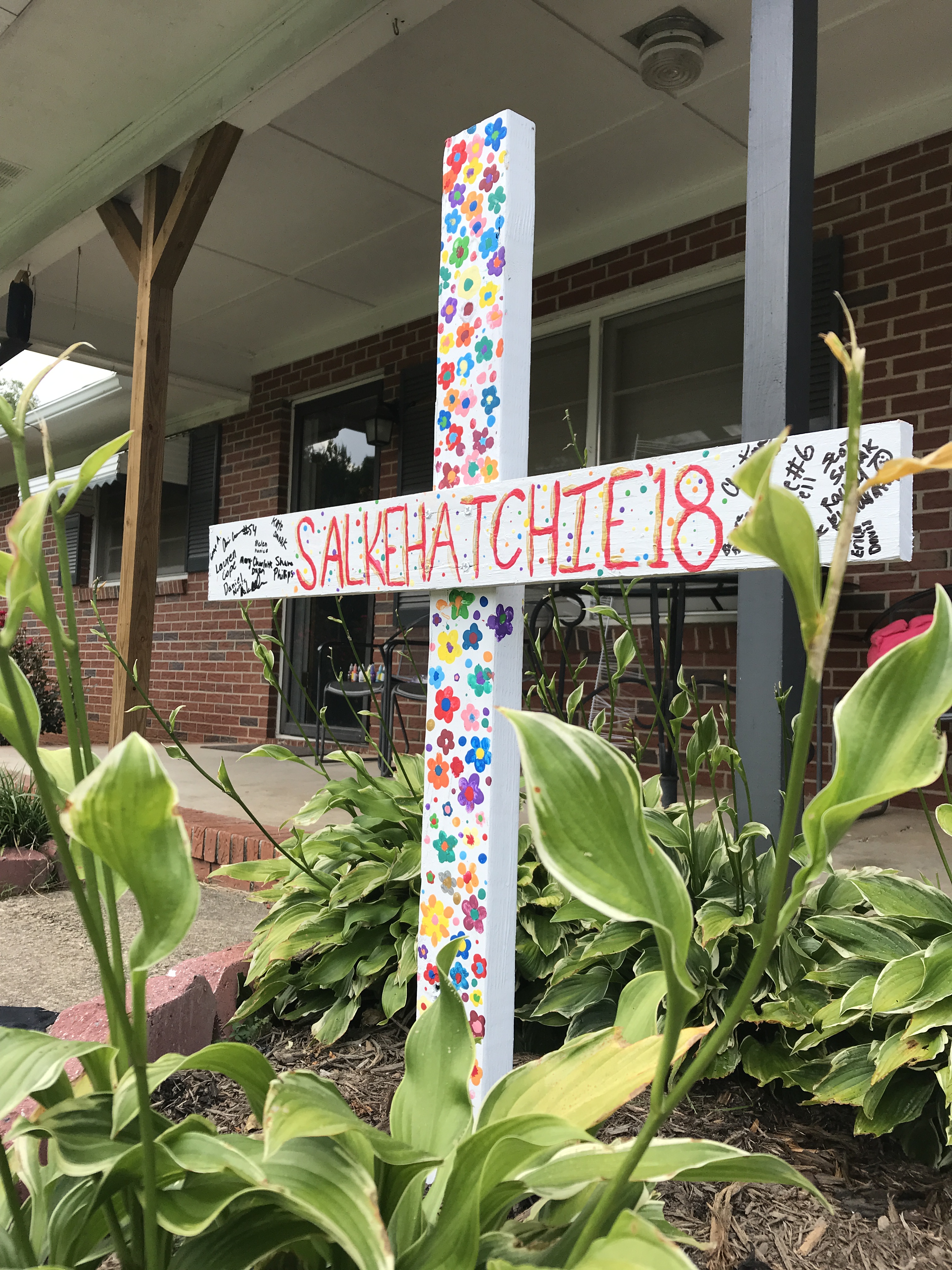
Salkehatchie ‘18 Reflections

EDF30398-8111-4DE2-817A-39E4C4D00AFB.jpeg    The human circle was formed, each person holding the hands of the other and then as every morning during the week, we give praise to God……”Lord prepare me to be a sanctuary, pure and Holy tried and true. With thanksgiving, I’ll be a living sanctuary for you.” And just like that, the sanctuary known as Salkehatchie Foothills Camp came to an end. There were hugs, handshakes, tears and laughter. New friendships forged and old friendships rekindled. Most importantly, a new family realized and a sanctuary renewed.
The week began with a Saturday send off of our Salkehatchie team from Virginia Wingard Memorial UMC in Columbia. The team headed to Pendleton, SC to the Foothills Camp. I watched the team leave knowing that I would soon join them. My task at hand, as a pastor, was to lead worship on Sunday morning then travel to Pendleton. On Saturday evening I received a text from my daughter Kate, a member of our church Salkehatchie team. She said she prayed at supper…..for the entire camp! She jumped right into serving. This was a proud parent moment.
When I arrived on Sunday afternoon at the Foothills Camp, I was greeted by Kate who was attending her first Salkehatchie. I walked passed the shower trailers and unloaded my bags in my home for the week, an elementary school gymnasium. There were cots and sleeping bags, suitcases and air mattresses scattered around the perimeter of the basketball court. I thank God for good friends because over near a corner of the room was a space saved just for me. Home sweet home.
I was attending my first Salkehatchie as an adult. In the early 80’s I attended Salkehatchie in Elloree, SC. Well, as you can guess, much has changed in the world since then. I am not as young as I once was but my passion to serve Christ is still strong. Back in the day at Salkehatchie, we dug outhouses, put tin on roofs, and added sheetrock to walls that had no walls. What I remember most is how the Salkehatchie experience changed my life and put me on the trajectory to becoming an Elder in The United Methodist Church.
Flash forward to 2018, my daughter Kate is 14, a second generation camper, and eligible to attend her first Salkehatchie camp. For one reason or another ministry kept getting in my way and I was unable to attend Salkehatchie with our church team. This year was different.
It was not long after arriving in Pendleton that I learned of the team I was going to serve with. What a wonderful and faithful team. And the bonus was Kate and I were going to serve together. The house we were assigned to was the house of Ms. Ruby Lee. The construction tasks included installing gutters, putting in a French drain in the front of the house, installing doors and shelving, scraping popcorn ceiling, patching some holes in the ceiling then painting, and adding ceiling fans in the kitchen. This work kept us busy the entire week. Our site finished the work on time and Ms. Ruby was overjoyed. We actually finished the work a little early on Friday afternoon and the team was able to enjoy ice cream in the Pendleton town square. And Ms. Ruby Lee joined us for ice cream too.
The Apostle Paul writes in his letter to the church at Corinth, “do you not know that your body is a temple of the Holy Spirit within you, which you have from God, and that you are not your own? (1 Corinthians 6:19). Our bodies are temples, sanctuaries of the Holy Spirit. So, you get a bunch of bodies together, then you have one big Sanctuary working together with the power of the Holy Spirt dwelling in each of us. With a hammer in one hand and the Bible in the other, we are sent.
Salkehatchie is more than painting, hammering, sawing, and digging. The experience is going from anywhere to everywhere to serve in the name of Jesus the Christ and being open to the leading of the Spirit. I’ve made new friends, have a new family, and experienced a daddy/daughter moment that I’ll never forget. Go make disciples. Don’t just sit in the sanctuary, go be the sanctuary and allow the Holy Spirit to work through you. Blessings on your journey.